The History of Capri's Blue Grotto: Tiberius to the Grand Tour
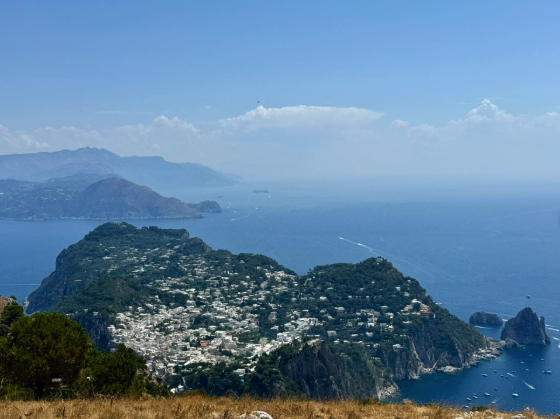
The Blue Grotto has been a Roman pleasure grotto, a fisherman's secret, a place locals feared, and finally the defining image of Capri. Its story runs from Emperor Tiberius to the writers of the Grand Tour, and it explains why the cave draws visitors from around the world today.
The short answer
The cave was a Roman nymphaeum under Tiberius, who ruled the empire from Capri for the last decade of his reign, then largely forgotten for centuries and avoided by local fishermen. It was rediscovered in 1826 by the German writer August Kopisch and the painter Ernst Fries, whose account turned it into a fixture of the Grand Tour. Statues recovered from the floor are now at the Casa Rossa in Anacapri.
To understand why a five-minute rowboat trip into a sea cave became one of the most famous experiences in the Mediterranean, you have to follow the grotto's long history. It is a story of imperial luxury, centuries of obscurity, a single spring morning in 1826, and a book that turned a local marvel into a European sensation. If you would rather plan a visit than read the backstory, you can compare Blue Grotto Capri Tours and tickets, but the history is part of what makes the cave worth the trip.
The cave, date by date
| Period | What happened |
|---|---|
| 1st century AD | Used as a marine nymphaeum in the reign of Tiberius, who ran the empire from Capri |
| Middle Ages | Largely abandoned; local fishermen avoided it, and it acquired a reputation for spirits |
| 1826 | Rediscovered by August Kopisch and Ernst Fries, who published an account of it |
| 19th century | Becomes a fixture of the Grand Tour and the reason many travellers came to Capri at all |
| 20th century | Roman statues recovered from the cave floor; several are displayed at the Casa Rossa in Anacapri |
A Roman marine grotto
The Romans knew the Blue Grotto long before it drew tourists. Capri was an imperial retreat, and Emperor Tiberius ruled the empire from the island for the last decade of his reign; his great residence, the Villa Jovis, still stands in ruins on the heights above. The luminous cave below was used as a marine nymphaeum, an ornamental grotto by the sea set aside for leisure and decorated for the purpose. This was not a wild, unknown place to the Romans but a deliberately adorned one.
Roman statues of sea gods, associated with Neptune and his tritons, were recovered from the seabed at the cave in the twentieth century. They are displayed today at the Casa Rossa museum in Anacapri, physical evidence that the grotto was decorated as a Roman marine retreat.
Centuries as a local secret
After the Roman era the cave slipped from wider memory. To the fishermen and boatmen of Capri it never disappeared; they knew it as the Grotta di Gradola, after the small landing of Gradola nearby. For a long stretch, though, the grotto carried a darker local reputation. Its dim mouth and echoing interior led many islanders to associate it with spirits and ill fortune, and they gave it a wide berth. It became, in effect, a place known to a few and avoided by many, absent from the itineraries of the travellers beginning to explore southern Italy.
This long gap is part of what makes the grotto's story unusual. Many famous sights were celebrated continuously from antiquity; the Blue Grotto instead fell almost entirely out of the record for centuries, remembered by working fishermen but shunned by most and unknown to the wider world. When it returned to fame it did so not through excavation or scholarship but through a traveller's curiosity and a writer's pen, which is why its modern reputation dates so precisely to a single moment in the nineteenth century rather than trailing back through the ages.
The morning of 18 April 1826
Everything changed on a spring morning in 1826. The German writer and painter August Kopisch, travelling with his companion Ernst Fries, had heard the local talk of a blue cave and persuaded a Capri fisherman, Angelo Ferraro, to take them to it. Guided through the low entrance in a small boat, they surfaced inside a chamber flooded with blue light and recognised at once that the local legend described something extraordinary rather than something to fear. The notary Giuseppe Pagano, who hosted the pair on the island, is remembered in the story alongside them.
You can see traces of this history on the island itself: the ruins of Villa Jovis above the sea, and the recovered statues at the Casa Rossa in Anacapri. Pairing the grotto with these sites turns a quick cave visit into a fuller day on Capri.
Why it was not really a discovery
It is worth being precise about what happened in 1826. Kopisch did not discover the Blue Grotto; the cave had always been there, the Romans had adorned it, and the islanders had always known it. What Kopisch did was pull it into the wider European imagination at exactly the right moment. His attention, and the account he would publish, transformed a feared local curiosity into a celebrated natural wonder. The distinction matters, because the grotto's fame is a story about attention and storytelling as much as about the cave itself.
Fame on the Grand Tour
Kopisch published his account of the experience in 1838, and the timing was perfect. Northern Europeans were travelling south in growing numbers on the Grand Tour, hungry for classical landscapes and natural marvels, and a sea cave glowing an impossible blue was exactly the kind of wonder they had come to find. Writers, painters and then ordinary tourists followed. Within a generation the Blue Grotto had become the defining image of Capri, reproduced in prints and paintings and fixed near the top of every visitor's list. The name that stuck was not the old Grotta di Gradola but the Grotta Azzurra, the Blue Grotto, describing the one thing every visitor remembered.
The grotto in the European imagination
What Kopisch set in motion was not just a rise in visitor numbers but a shift in how the cave was understood. Almost overnight, a place that islanders had linked to spirits and misfortune became a symbol of natural beauty and Romantic wonder. Painters travelled to Capri specifically to capture the blue, and their canvases, along with prints sold across northern Europe, spread the image far beyond anyone who could make the journey. The grotto became a set piece of the Romantic imagination, its light standing in for the sublime encounters with nature that the era prized.
That reputation fed on itself. As more writers and artists came, the cave accumulated the kind of cultural weight that turns a sight into a must of any southern itinerary, and Capri's identity as a destination grew up around it. By the later nineteenth century the island had become a fixture for travellers, bohemians and eventually a wider public, and the Blue Grotto sat at the centre of that story. The cave had gone, in a single lifetime, from a feared local landmark to the emblem of an entire island's allure.
It is worth holding both halves of that history in mind on a visit. The blue you see is the same light the Romans decorated the cave to enjoy and the same light that startled Kopisch and his companions in 1826; the crowds and the tickets are simply the modern residue of the fame his account created. Seen that way, the short rowboat trip connects you to a long chain of people who came for the same reason, from emperors to Grand Tourists to today's day-trippers. To make that trip yourself, compare the Blue Grotto Capri Tours and tickets, or read the companion history page.
The cave today
Remarkably little about the visit has changed since Kopisch's day. You still cross to the cave by boat, still transfer into a small rowboat, and still lie back to clear the low mouth before the blue opens around you. The crowds are larger and the tickets formalised, but the physics Kopisch marvelled at, sunlight refracting up through a submerged opening, is the same one that fills the cave each calm, bright morning. To follow in his wake, compare the Blue Grotto Capri Tours and tickets, or read the full history of the Blue Grotto and the visitor guide.
Before you go
- Plan the practical side: visitor information.
- Work out how to reach Capri: getting there.
- Read what the cave has been: the history of the Blue Grotto.
- Check the common questions: FAQs.
Tours that fit this trip
Chosen to match what this guide covers, not for what sells.
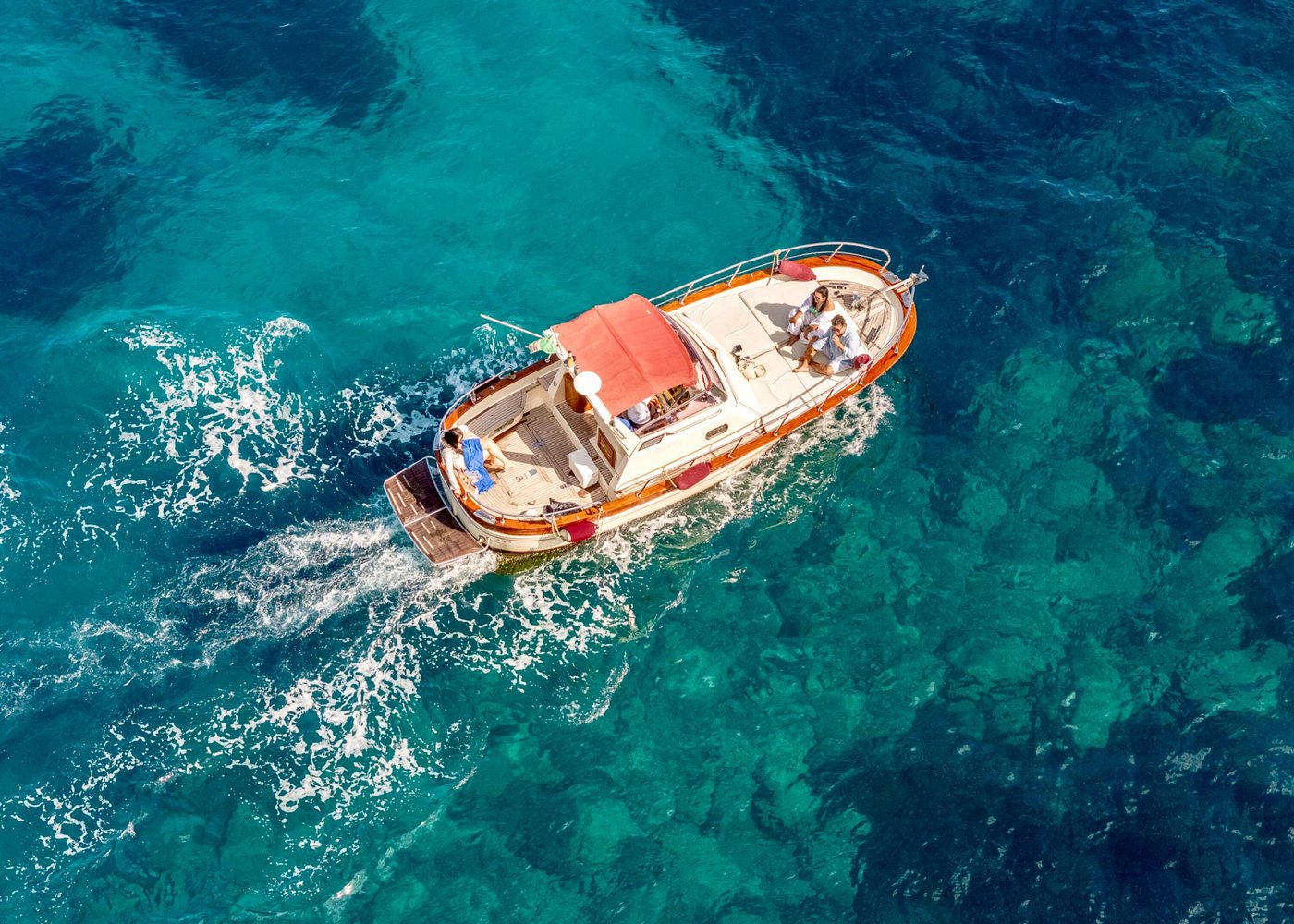
3-hour private boat tour of the island of Capri
A private boat around the island, with time to look at the coast Tiberius built above.
From $478 per person
Check Availability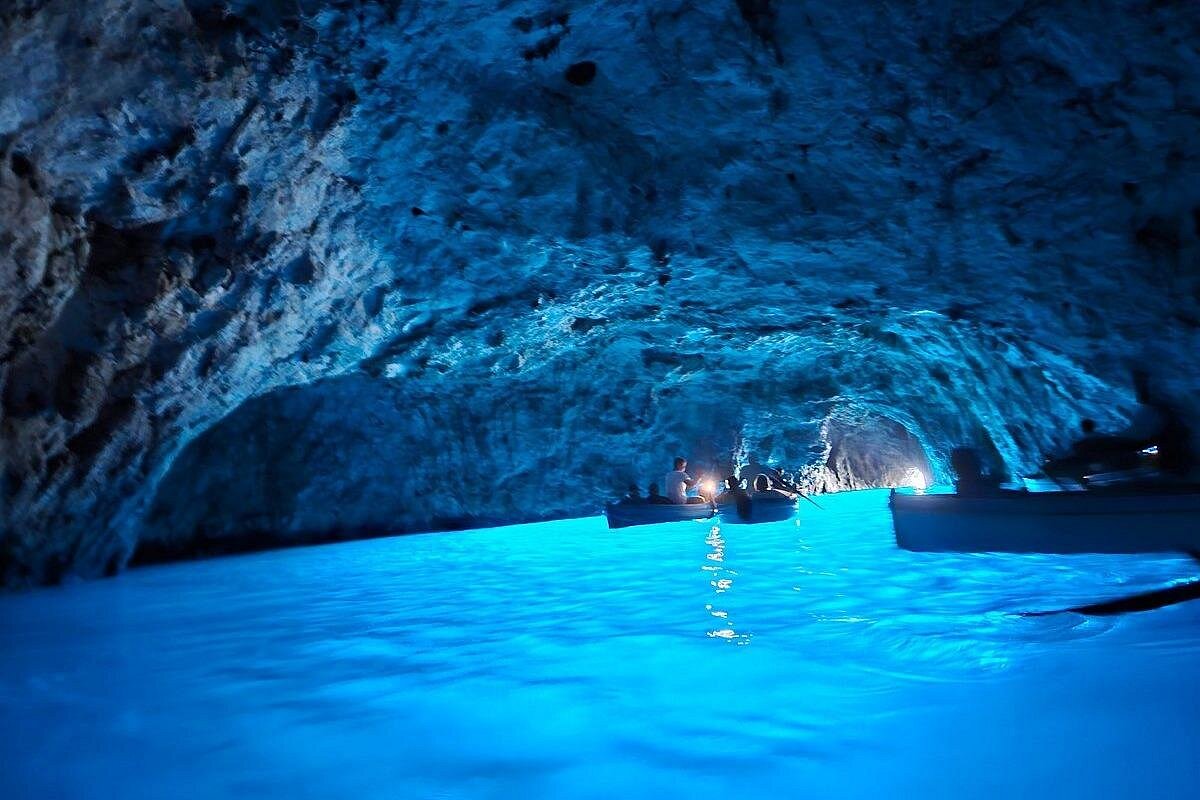
Full-Day Capri, Anacapri and Blue Grotto Tour from Sorrento
The full-day Anacapri itinerary, which reaches the land above the cave rather than only the water in front of it.
From $184 per person
Check Availability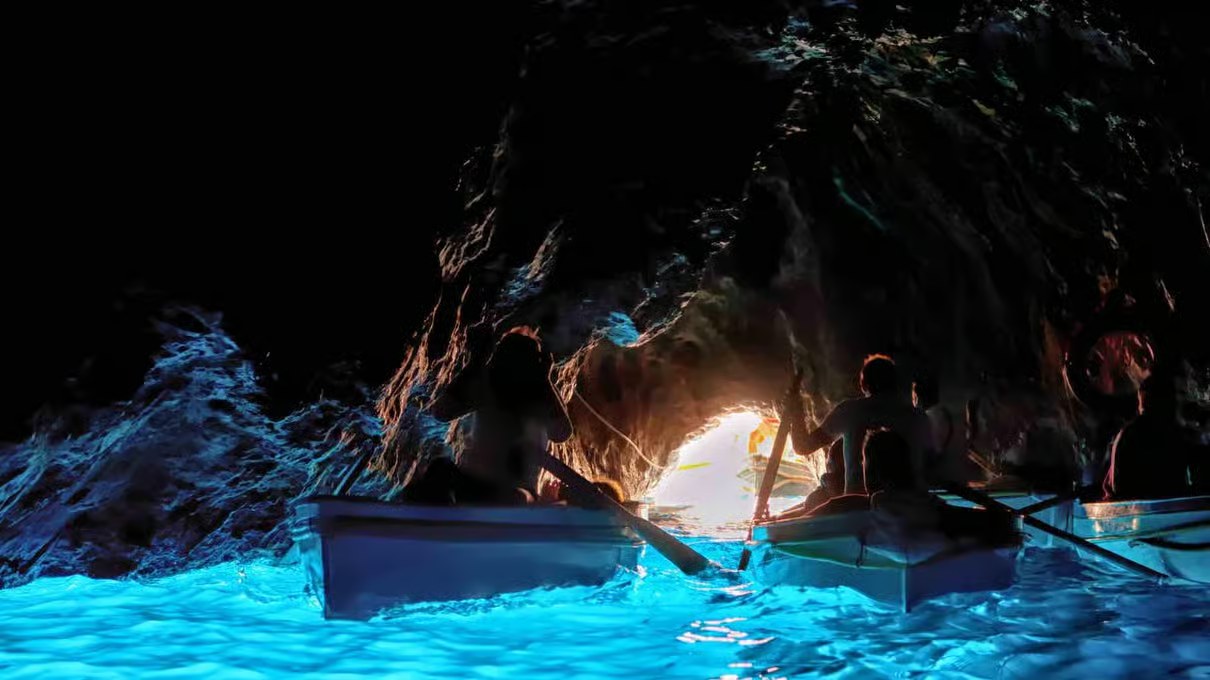
Capri: 3-Hour Private Boat Tour with Blue Grotto Visit
Three private hours built around the grotto itself, for readers who came for the cave rather than the island.
From $459 per person
Check Availability