Closed by Swell: The Blue Grotto’s Cancellation Season, Month by Month
A cave with a metre-high entrance closes whenever the sea decides, and no operator, price tier or booking channel changes that. This is what the odds really look like and what to do with them — including the one itinerary change that makes a closure survivable.
In this guide
Why a metre matters
The Blue Grotto’s visible entrance is roughly a metre high at normal sea level. A rowboat with four passengers lying flat clears it by a small margin, and the rower times the passage to the swell using a chain fixed to the rock.
Now add half a metre of swell. The clearance disappears on the crest and the boat is pushed against rock on the trough. There is no version of that which is safe, and there is no bigger boat that solves it — a larger vessel cannot enter at all.
So the cave does not close for storms or for bad weather in the ordinary sense. It closes for sea state, which can be significant on a sunny day with no cloud in the sky, and that is the fact that catches visitors out.
The year, month by month
| Period | Sea state | Closure risk | Crowds | The read |
|---|---|---|---|---|
| November–March | Most unsettled of the year | Highest | Almost none | Many tours do not run; treat entry as a bonus |
| April | Improving, still variable | Moderate to high | Low | The season is starting; keep a spare day |
| May | Settling | Moderate | Building | Good odds, thin crowds — a strong month |
| June | Generally calm | Lower | High | Among the best odds of the year |
| July–August | Calm mornings, breezy afternoons | Lower, rising through the day | Peak | Best odds, worst queues. Go early |
| September | Calm, warm water | Lower | Falling | The sweet spot on every axis |
| October | Turning | Rising | Low | Fine odds early in the month, less so late |
The pattern is unusually simple for a seasonal table: the summer half of the year has better odds and worse queues, and the winter half has neither crowds nor much chance of getting in.
Which wind closes it?
The grotto faces north-west, which is the useful thing to know.
Wind and swell from the north and west push directly into the entrance, and those are the conditions that close it. A southerly, which can be strong, leaves the cave sheltered by the island itself and the cave can be open on a day that feels windy on the other coast.
That is why local forecasts and general ones disagree so often here. Sorrento can be breezy and the north-west coast of Capri calm, or the reverse. The people who know are the skippers, and they will not commit until they see it.
What are the actual odds?
Nobody publishes a number, and any specific figure you read should be treated with suspicion. What is well established is the shape.
Through the summer months the cave is open on the large majority of days, and the failures cluster in windy spells rather than falling evenly. In the winter half of the year closures are frequent enough that many tour operators do not run grotto itineraries at all, which is itself the clearest signal about the odds.
The honest planning position: in June to September, assume it will probably be open and have a fallback. In November to March, assume it probably will not and treat entry as a bonus if it happens.
Does the time of day matter?
Yes, and more than most seasonal factors.
The Bay of Naples develops a thermal breeze through the day in settled weather — calm at dawn, building through the morning, strongest in the afternoon. That breeze raises a short local chop, and a short chop into a metre-high entrance is exactly what closes it.
So a cave that was open at ten can be closed at two on a day when nothing else has changed. Morning departures are not just about queues; they are about catching the sea before it wakes up.
This is also why an afternoon private charter, which sounds like a civilised way to avoid crowds, has worse odds than a crowded nine o’clock departure.
Who decides, and when?
The skipper, at the cave mouth, on the day, and nobody earlier.
Operators do not cancel Capri boat days for the grotto, because the boat day runs regardless — the island, the Faraglioni and the swim stop are unaffected by a swell that closes a cave. What they do is take you to the entrance, look, and either join the queue or continue the circuit.
That means you generally find out at about half past ten in the morning, standing offshore, looking at the slot in the rock. It is an anticlimactic moment and there is no appeal.
Occasionally the closure is announced earlier if conditions are obviously bad, and a good operator will tell you at check-in that entry looks unlikely, which is worth more than false optimism.
What happens to your money
Better than at most attractions, because of how the fee is structured.
| What you paid | If the cave is closed |
|---|---|
| The tour price, paid online | Not refunded — the boat day ran |
| The grotto entry, €18–19 | Never collected; you keep it |
| The rowboat fee | Never collected; you keep it |
| A listing where the fee was bundled | Operators generally refund that portion |
So a closure costs you the cave and nothing else. The operator delivered a crossing, an island circuit and a swim stop, which is what the price bought, and the on-site fees were never taken.
Free cancellation up to 24 hours before is the instrument for a forecast you do not like, and it is standard across these listings. It is not much use for a decision made at half past ten on the water.
Building a second Capri day in
The single most effective thing available, and almost nobody does it.
If Capri is a day trip from a mainland base where you are staying several nights, book the grotto day early in your stay rather than late. A closure on day two leaves room to try again on day four; a closure on your last day leaves nothing.
If you are staying on Capri itself, the problem largely disappears. You can look at the sea each morning and go when it is flat, which is why island stays have far better outcomes at this particular attraction.
And if the trip genuinely has one Capri-shaped day in it, take the earliest departure of that day and choose a listing whose island itinerary you would enjoy regardless. That is the whole mitigation available.
What to do when it is shut
The good news is that a closed grotto barely dents a Capri day, provided the listing had a day in it.
- The Faraglioni. Three sea stacks with an arch a small boat can pass through, on the south coast and sheltered from the north-west swell that closed the cave.
- The other sea caves. The Green Grotto and the White Grotto are less famous, less queued and open in conditions that shut the Blue Grotto.
- The swim stop. Unaffected, and the highest-rated part of these tours in the reviews anyway.
- Anacapri and Monte Solaro. The chairlift to the summit is a different Capri entirely and is not a sea-state question.
- Capri town and the Piazzetta. Reached by funicular from Marina Grande; ninety minutes minimum to be worth it.
An itinerary containing three of those is a full day with or without four minutes in a cave.
Is winter worth attempting?
For the grotto specifically, no. For Capri, sometimes.
November to March brings the most unsettled sea of the year and a high rate of closure, and a good number of tour operators simply do not run grotto itineraries in those months. Ferry schedules thin, and the island goes quiet in a way that some travellers find wonderful and others find shut.
If you are on the coast in winter and want to see Capri, go — it is beautiful and empty and cheap. Just do not build the day around the cave, because the odds are genuinely poor and the disappointment is avoidable by expecting nothing.
The best months
September, then June, then May.
September has the best combination: settled sea, warm water for the swim stop, the peak crowds gone and the queue at the cave materially shorter than in August. If one month has to do everything, it is this one.
June has comparable sea odds with more people and slightly cooler water. May has thinner crowds and slightly less settled conditions, and is excellent value.
July and August have the best raw odds of an open cave and the worst queues in front of it — an hour offshore in full sun is a real cost, and it is the reason a morning departure matters most in exactly those two months.
The short verdict
Go in September if you can, June or May if you cannot, and take the earliest departure available in any month.
Book the Capri day early in your stay rather than late, so a closure leaves room for a second attempt. That single change does more for your chances than the choice of operator, boat or price tier.
And choose a listing whose island itinerary you would be happy with anyway. The cave is four minutes and the sea decides whether you get them; the Faraglioni, the swim stop and the crossing are yours regardless, and they are most of why the day is worth taking.
Common questions
Why does the Blue Grotto close so often?
Which wind closes the Blue Grotto?
Is the cave more likely to be open in the morning?
What happens to my money if it is closed?
What is the best month for the Blue Grotto?
Should I try in winter?
Where to go next
- Which departure — the port that gets you there earliest
- The day, timed — what fills the hours when the cave does not
- Getting to Capri — ferry schedules, which thin in winter
- Questions answered — closures, fees and conditions
- Compare Blue Grotto Capri Tours — every departure and format, side by side
Tours that fit this trip
Chosen to match what this guide covers, not for what sells.
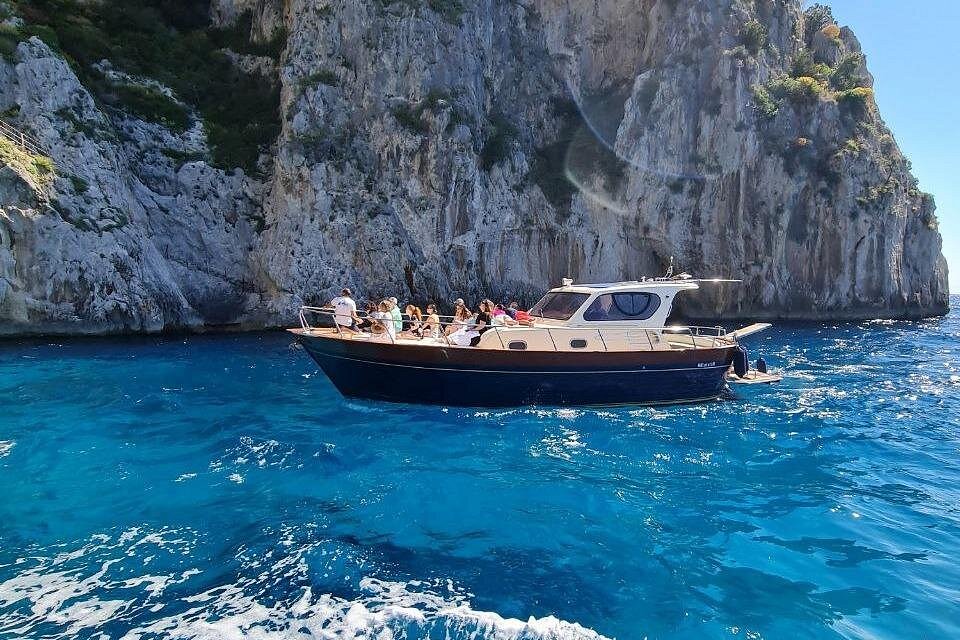
Sorrento: Capri Small-Group Boat Tour with Swim & 4 hour ashore
A day with a substantial swim stop and an island circuit — the listing to hold if the cave is shut, because the rest of it is unaffected.
From $116 per person
Check Availability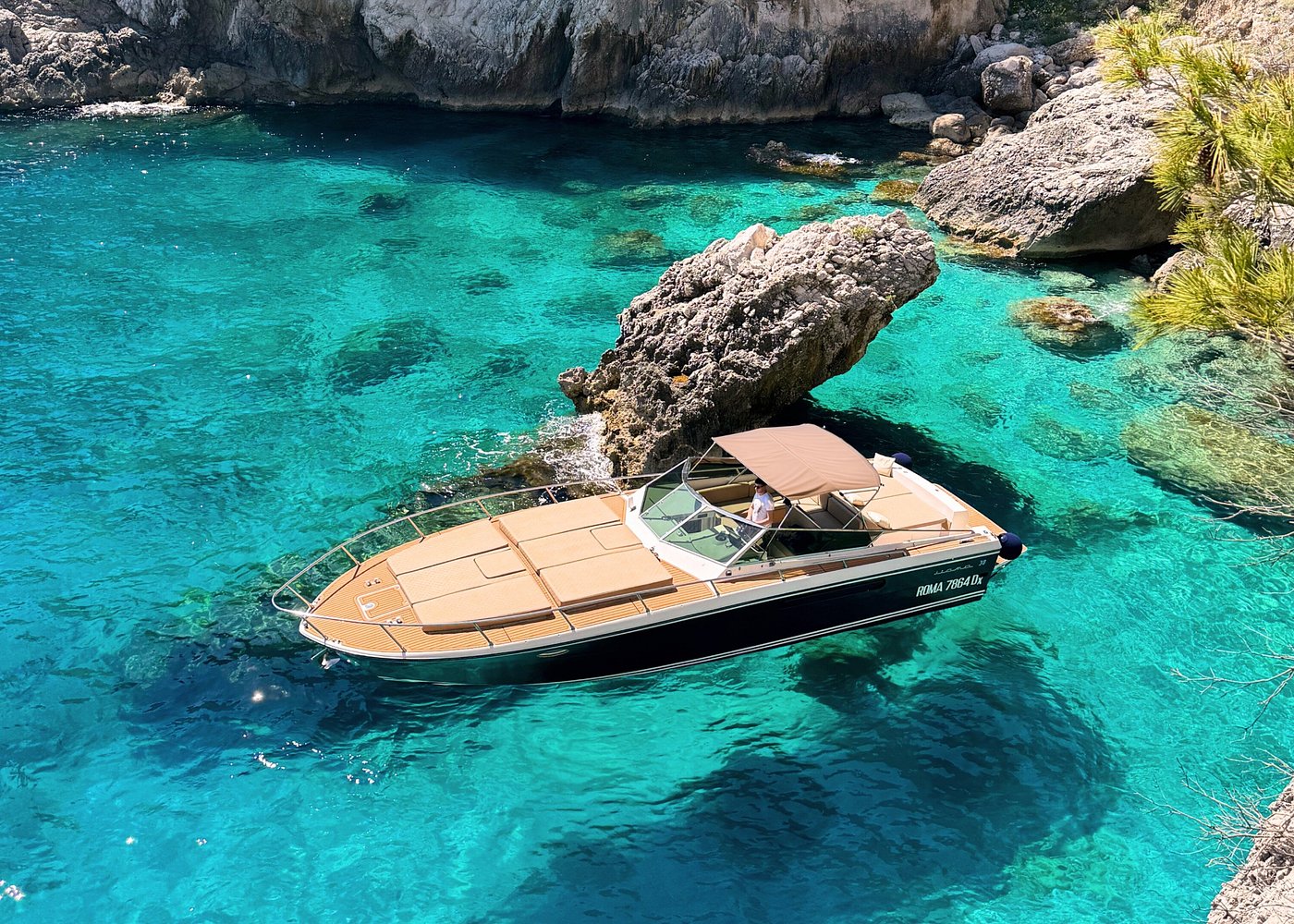
Private Boat Tour of Capri
A private boat with a flexible two-to-seven-hour window, which is the only format that can wait for the sea to settle.
From $399 per person
Check Availability
Capri: 3-Hour Private Boat Tour with Blue Grotto Visit
A three-hour private focused on the grotto, worth booking early in a stay so a closure leaves room for a second attempt.
From $459 per person
Check Availability