The Blue Grotto Fee, the Rowers’ Cooperative and Your Tour Price
You book a Capri day, you pay for it, and then at the cave mouth somebody asks you for cash. That surprise is the most common complaint about this attraction and it is entirely avoidable — the money chain here is unusual but it is not hidden.
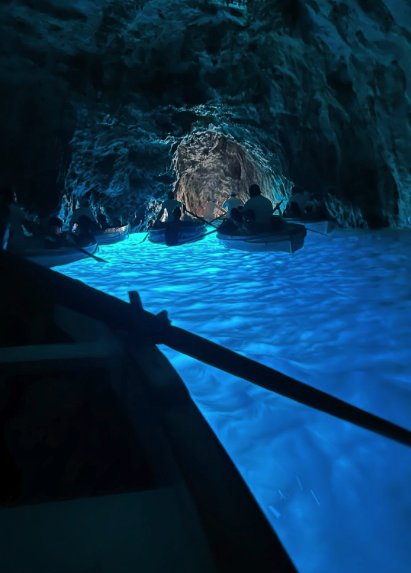
In this guide
- Three payments, three recipients
- What your tour price covers
- The grotto entry fee
- The rowers’ cooperative
- The money, laid out
- Why cash, and how much
- Do any tours include it?
- Going by land from Anacapri
- Can you do this without a tour?
- What happens to the money if the cave is closed
- How to avoid the surprise
- The short verdict
Three payments, three recipients
This is one of very few attractions in the network where a single visit involves three separate commercial parties, and understanding that removes almost all the confusion.
- Your tour operator takes you from the mainland to Capri and around the island. That is the price you paid online.
- The site charges an entry fee for the grotto itself, collected at the cave.
- The rowers’ cooperative operates the small boats that actually take you inside, and they are a separate local operation.
Nobody is skimming. These are three genuinely different businesses providing three genuinely different services, and the only real failure is a listing that does not make it clear before you board.
What your tour price covers
The boat and the day. Almost always: the crossing from the mainland, the circuit of the island, the swim stops, a skipper and usually a guide.
Almost never: the grotto entry and the rowboat. Those are collected at the cave, per person, in cash, on the day.
The listings are generally honest about this. Look for the phrase in the exclusions, which typically reads something like “Blue Grotto entrance fee (approximately €18–19, payable on site)”. A listing that says it clearly is not warning you about a catch; it is telling you the fee structure of the attraction.
The grotto entry fee
Around eighteen to nineteen euro per person, and it is worth understanding what it is.
It is a site admission for a natural attraction with managed access, collected at the point of entry because there is no other point at which it could be collected — the cave has no landing, no gate and no building.
The figure moves with the season and with the year, so treat any published number as approximate and carry a little more than you expect to need. It is the same fee whether you arrived by tour boat from Sorrento or walked down from Anacapri.
The rowers’ cooperative
The small wooden boats are operated by a local cooperative, and this is the part that is genuinely distinctive.
No large boat can enter the grotto: the opening is barely a metre high and the swell moves constantly, so the only way in is a low wooden boat rowed by somebody who does it dozens of times a day and knows exactly when to pull. The rowers time the entry to the swell, using a chain fixed to the rock rather than the oars.
That is a skilled job on the water in the sun, and it has been done by the same community operation for generations. The fee for it is separate from the site entry and is collected at the same moment.
Tipping is customary and not obligatory. A small note per boat is normal and it is genuinely appreciated.
The money, laid out
| What | Roughly | Paid to | Paid when | Included in a tour price? |
|---|---|---|---|---|
| Boat day from the mainland | $99–$210 | Your tour operator | Online, in advance | Yes — this is the price |
| Grotto entry | €18–19 | The site | At the cave, cash | Rarely |
| Rowboat | Part of the same on-site payment | The rowers’ cooperative | At the cave, cash | Rarely |
| Tip for the rower | A small note | The rower | At the cave, cash | No |
| Ferry, if independent | Varies | The ferry company | At the port | n/a |
| Bus from Anacapri | A few euro | The bus operator | On board | n/a |
The pattern is clear enough: what you book online is the transport, and what happens at the cave is a separate transaction in cash.
Why cash, and how much
Because the transaction happens on a boat, in the open sea, alongside a cliff.
There is no terminal, no signal guarantee and no shelter. Card payment at the cave mouth is not something to rely on, and the practical answer is to carry euro in small notes for everybody in your party plus a little extra for tips.
Budget around twenty-five euro a head to be comfortable. Running short on the water, with the rowboat alongside and eleven other people waiting, is a genuinely awkward few minutes.
Do any tours include it?
A small number, and they are worth identifying because they remove the whole problem.
Some private and semi-private listings bundle the grotto fee into the price, which is easier to do when the skipper is handling a party of four rather than a boatload of twenty. Others state clearly that the fee is extra.
The way to tell is the exclusions list, not the price. A $198 listing that includes the fee and a $180 one that does not are the same money, and the first has removed a step you would otherwise manage on a rocking boat.
Where a listing says “optional Blue Grotto visit”, assume the fee is extra and that entry is conditional.
Going by land from Anacapri
The alternative route, and it changes the money and the day.
A bus runs from Anacapri down to a jetty above the cave. From there you descend steps to the water and transfer to a rowboat exactly as the boat passengers do, paying the same site entry and the same rowboat fee.
What changes: no mainland crossing, no boat day, and a much lower total cost if you are already on Capri. What does not change: the queue, the sea state, and the fact that the cave closes on conditions.
The land route has its own constraint, which is that when the sea is up the rowboats do not run from the jetty either, and you have made the journey for nothing. The boat route at least gives you an island circuit as consolation.
Can you do this without a tour?
Entirely, and for people staying on Capri it is the obvious way.
Take the public ferry or hydrofoil to Marina Grande from Sorrento, Naples or the Amalfi Coast, then either a local boat to the cave or the bus to Anacapri and down. Pay the site entry and the rowboat at the cave, in cash, as everybody does.
What you give up is the island circuit, the swim stops and the small-group boat, which are most of what a tour day actually is. What you gain is control of your timing — and on an attraction that closes on sea state, being able to try again in the afternoon or the next morning is worth a great deal.
For a visitor staying on the island, independent is plainly right. For a day-tripper from the mainland, the tour is doing real work.
What happens to the money if the cave is closed
The cleanest part of the whole arrangement, and it is worth knowing.
You pay the site entry and the rowboat at the cave, so if the cave is closed you pay neither. There is nothing to refund because nothing was collected. That is the one genuine advantage of the on-site payment structure.
Your tour price is a different matter: you paid for a boat day and you are getting a boat day, with an island circuit and a swim stop, minus the grotto. Most operators treat that as the tour having run, which is defensible — and it is why the listings that build a good day around the cave are worth more than the ones that do not.
Free cancellation up to 24 hours before is the real instrument here, and it is standard across these listings.
How to avoid the surprise
- Read the exclusions before booking. The grotto fee is named there on almost every honest listing.
- Carry euro in small notes. Around twenty-five a head covers entry, the rowboat and a tip.
- Assume “optional” means extra and conditional. Both halves of that.
- Check whether a private listing bundles it. Some do, and the total can be the same or lower.
- Do not count on a card. No terminal, no shelter, no guarantee of signal.
The short verdict
Your tour price is the boat. The cave is a separate eighteen or nineteen euro plus the rowboat, collected in cash at the entrance by two parties who are not your tour operator.
That is unusual and it is not sharp practice: no large boat can enter the grotto, so a local cooperative rows everybody in four at a time, and a natural site with no gate collects its admission at the water.
Carry the cash, read the exclusions, and the whole thing stops being a surprise. And if the sea closes the cave, you keep the money — which is the one part of this arrangement that works entirely in your favour.
Common questions
Is the Blue Grotto entrance fee included in tours?
How much cash should I bring?
Why can't the tour boat go inside?
What happens to the fee if the cave is closed?
Can I visit the Blue Grotto independently?
Is tipping the rower expected?
Where to go next
- What a Capri day costs — the $99 to $806 spread, itemised
- The day, timed — where the cash payment falls in the morning
- Getting to Capri — ferries, the funicular and the Anacapri bus
- Questions answered — fees, closures and what is included
- Compare Blue Grotto Capri Tours — every departure and format, side by side
Tours that fit this trip
Chosen to match what this guide covers, not for what sells.
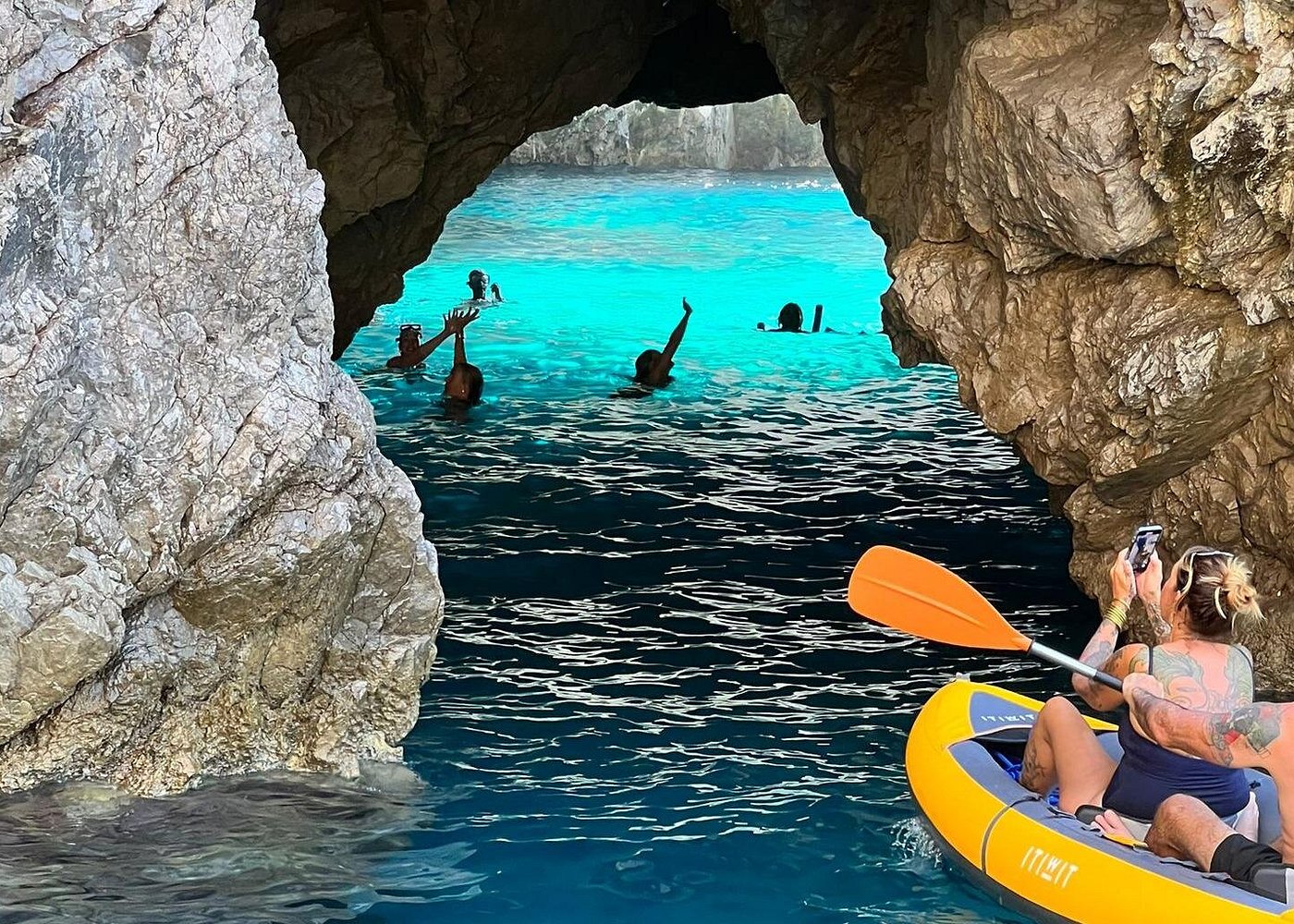
Blue Grotto Visit and Capri Semi-Private Boat Tour
A semi-private boat focused on the grotto, where a skipper handling a small party can manage the on-site fee for you.
From $198 per person
Check Availability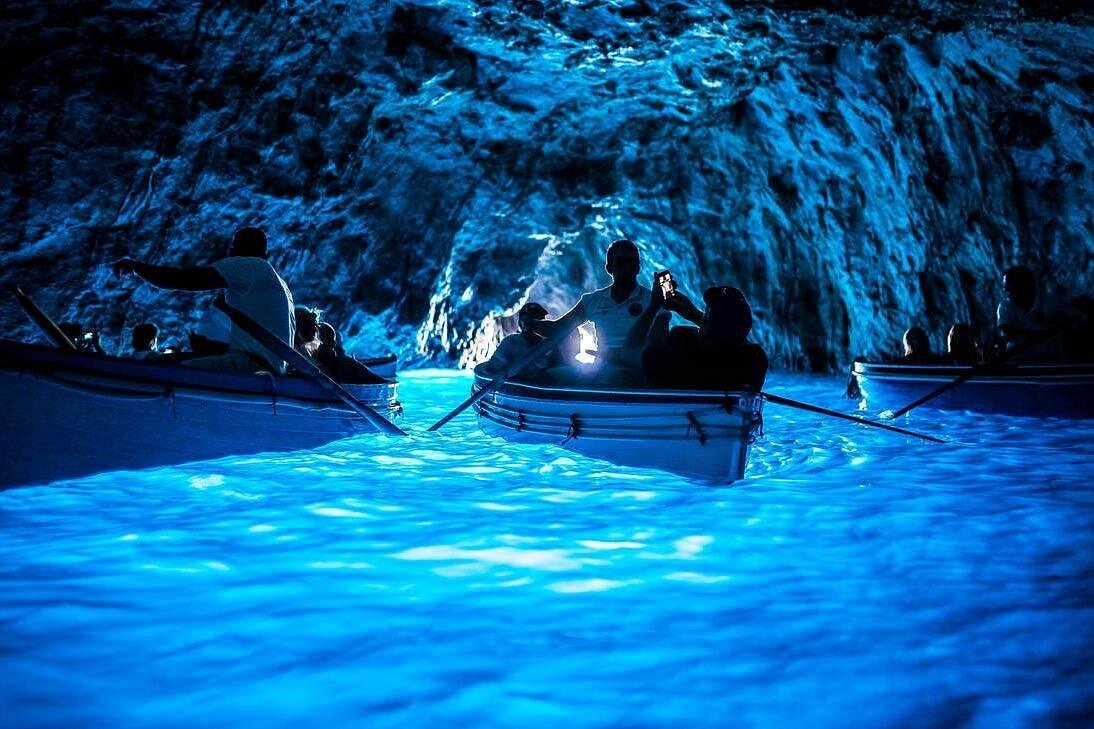
Capri Boat Tour with Optional Blue Grotto Visit from Sorrento
A listing whose title says “optional” plainly — which means the fee is yours and entry is conditional, stated up front.
From $136 per person
Check Availability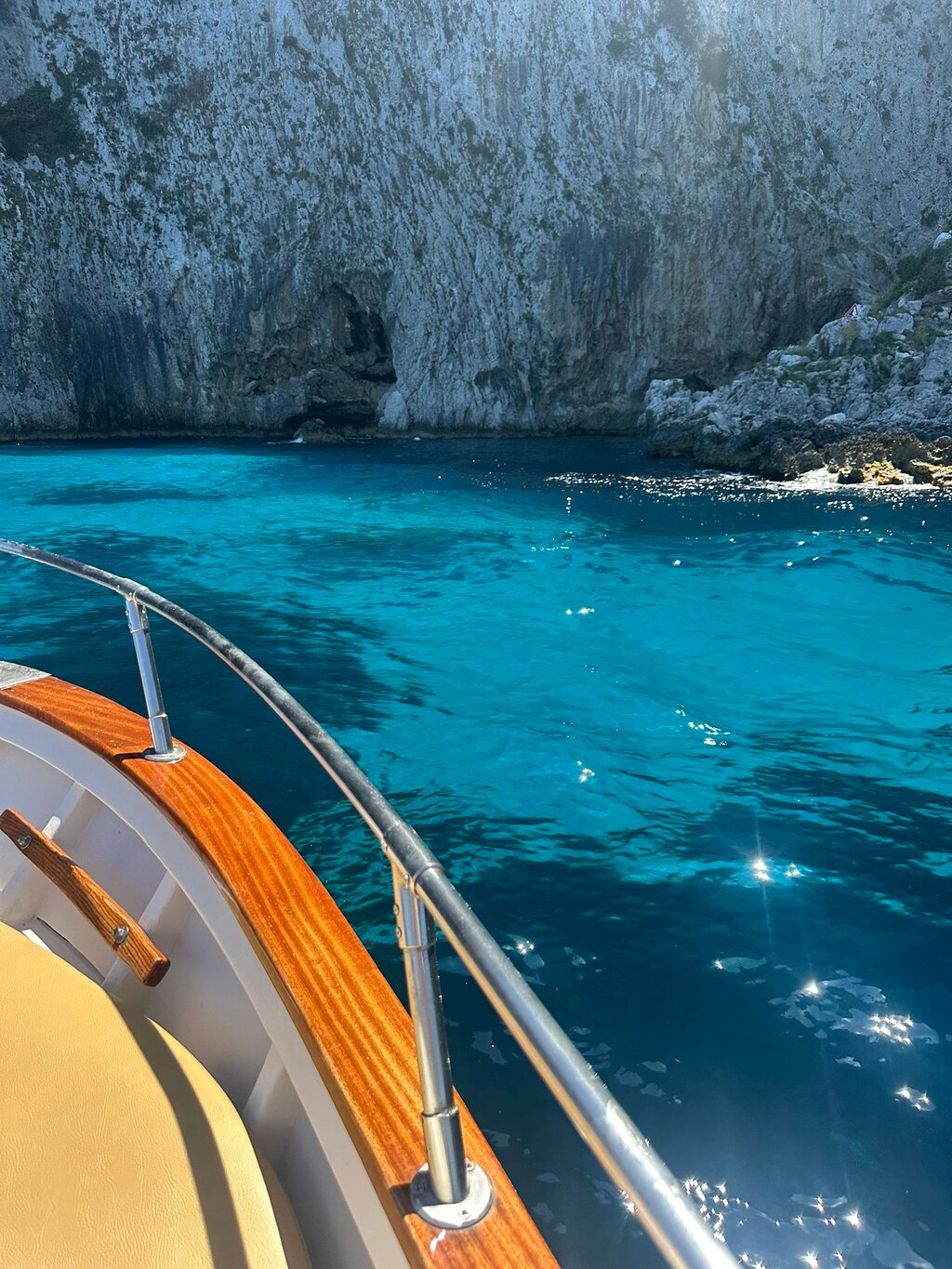
Capri Private Boat Tour with Capri Skipper
A private boat with a skipper, where the whole money chain is handled by one person rather than three.
From $276 per person
Check Availability